

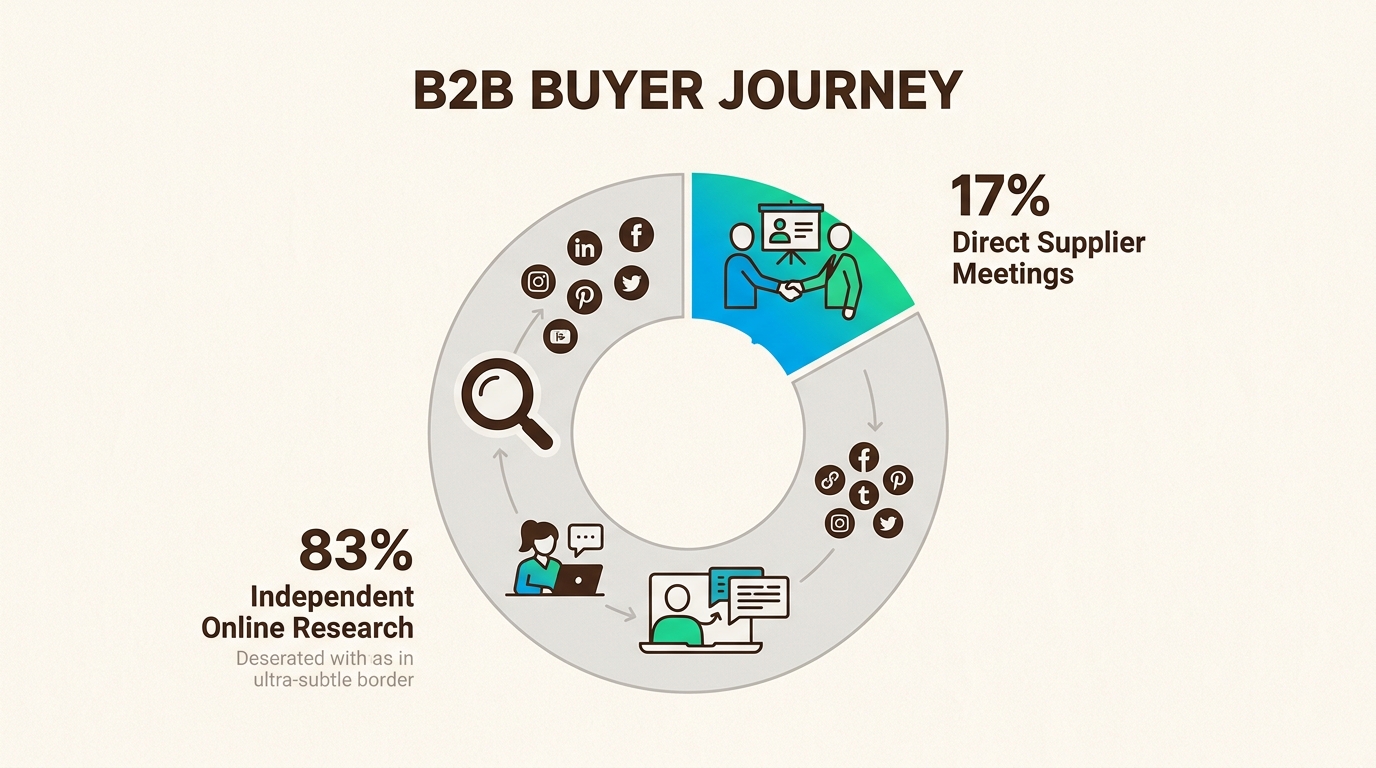
Generating consistent, quality leads is the lifeblood of any B2B business. But here’s the challenge: the way buyers research and make purchasing decisions has changed dramatically. According to Gartner, buyers now spend only 17% of their purchasing journey meeting with potential suppliers. That means the majority of their decision-making happens long before they ever speak to your sales team.
So how do you reach prospects during that critical research phase? And more importantly, how do you turn that early interest into qualified sales opportunities? Let’s break it down.
What is B2B lead generation?
B2B lead generation is the process of identifying and attracting other businesses that could benefit from your products or services. Unlike B2C sales, where you’re typically selling to individual consumers, B2B involves longer sales cycles, multiple decision-makers, and higher-value transactions.
Leads generally fall into two categories:
- Marketing Qualified Leads (MQLs) are prospects who have shown interest through your marketing efforts. Perhaps they’ve downloaded a whitepaper, subscribed to your newsletter, or attended a webinar. They’re not ready to buy yet, but they’ve raised their hand as potentially interested.
- Sales Qualified Leads (SQLs) have taken action that signals buying intent. They’ve requested a demo, contacted your sales team, or asked for pricing. These leads should be your top priority.
The key is focusing on quality over quantity. A hundred unqualified contacts are worth far less than ten prospects who genuinely need what you offer. At Inspire BDM, we’ve seen this firsthand working with engineering and manufacturing businesses across Lancashire and Yorkshire.
Building your lead generation foundation
Before diving into specific tactics, you need a solid foundation. Skipping this step is like building a house on sand.
Identifying your ideal customer
Start by creating an Ideal Customer Profile (ICP). Ask yourself:
- What specific problems does my product or service solve?
- Which industries or sectors face these problems most acutely?
- What size of company typically has the budget and need for my solution?
- Who are the decision-makers and influencers within those companies?
Look at your existing customer base for patterns. Our work with NR Engineering showed how understanding the nuts and bolts of a manufacturing business leads to more effective targeting.
Developing buyer personas
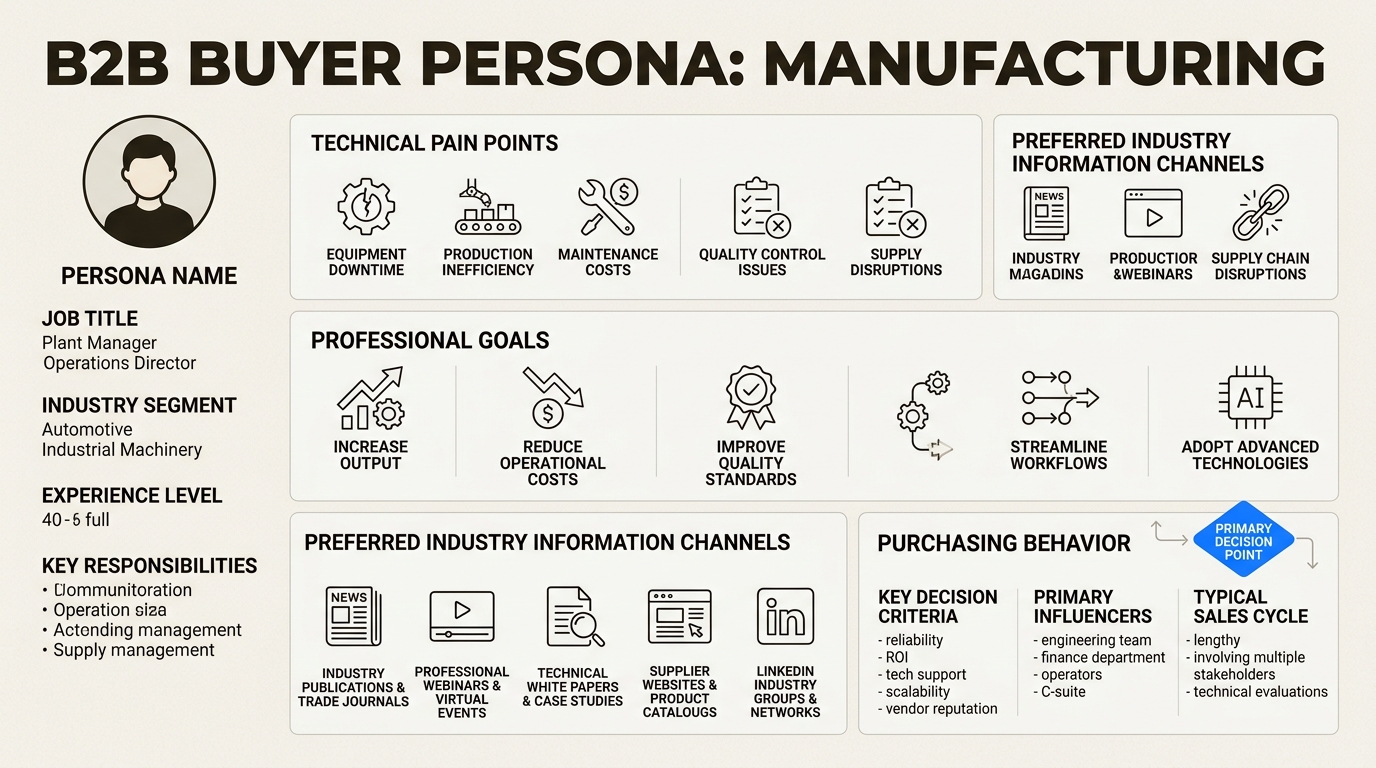
Once you know the types of companies to target, create 3-4 detailed buyer personas. For each persona, document:
- Their role in the buying process (decision-maker vs influencer)
- The specific pain points and challenges they face daily
- Their professional goals and how your solution helps achieve them
- Which information channels they use (LinkedIn, industry publications, trade shows)
Don’t overcomplicate this. Three well-researched personas are more useful than ten vague ones. Our experience with Keighley Laboratories demonstrated how focusing on the right personas leads to better engagement.
Setting SMART goals
Vague goals like “generate more leads” won’t cut it. Use the SMART framework:
- Specific: Increase qualified leads from manufacturing companies
- Measurable: Target a 30% increase in MQLs
- Achievable: Based on your current resources and market conditions
- Relevant: Aligned with your overall business growth objectives
- Time-bound: Achieve this within the next quarter
Proven B2B lead generation strategies
Now let’s look at the tactics that actually work. You don’t need to implement all of these. Choose 3-4 that fit your resources and audience.
Content marketing and SEO
Here’s a statistic that should get your attention: 93% of B2B buying processes start with an online search. If you’re not showing up when prospects search for solutions to their problems, you’re invisible.
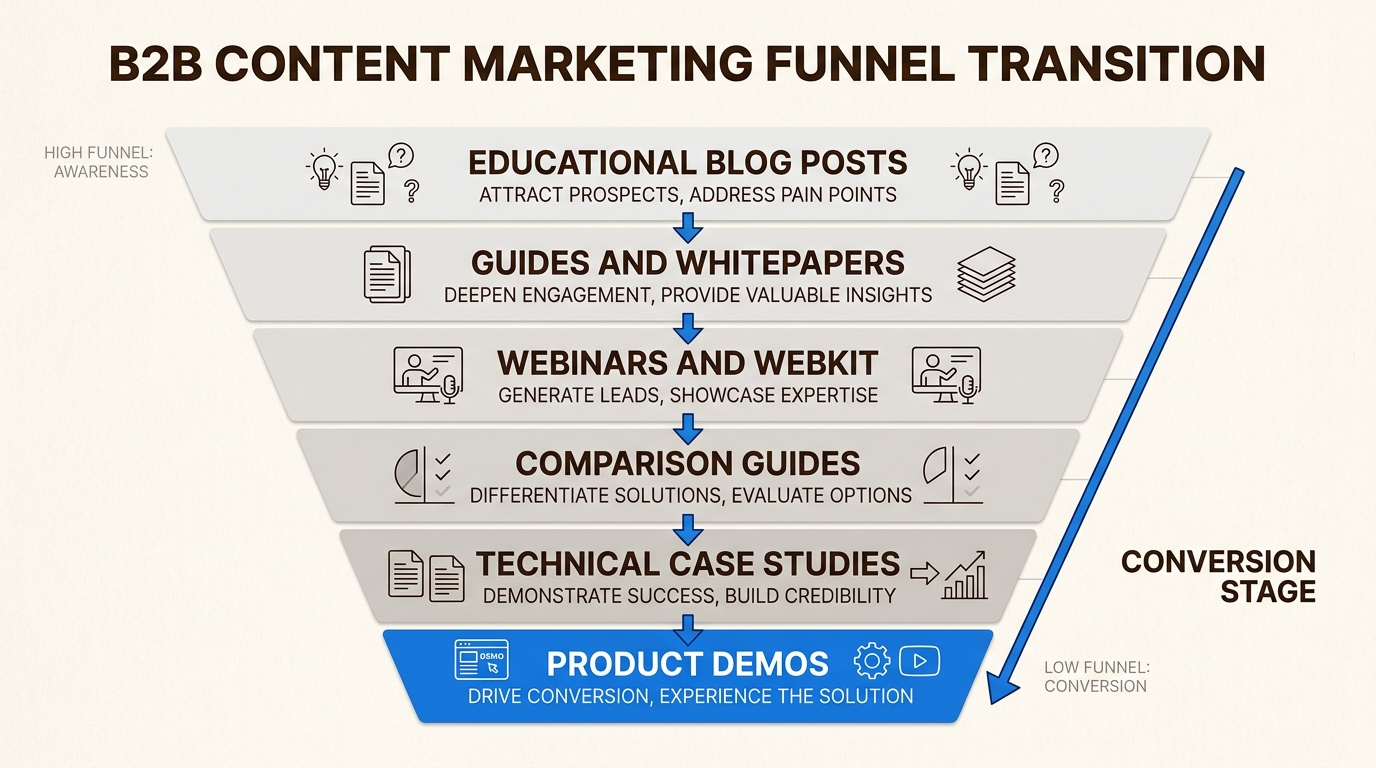
Content marketing isn’t about churning out blog posts for the sake of it. It’s about creating genuinely useful resources that answer the questions your prospects are asking. Consider:
- Educational blog posts that address common industry challenges
- Whitepapers and guides that dive deeper into specific topics
- Case studies showing how you’ve helped similar businesses (like our engineering client work)
- Webinars that demonstrate your expertise while capturing contact details
The key is targeting buying-intent keywords. Research from Belkins shows that comparison queries (like “[competitor] alternatives”) convert at 8.43%, while category queries convert at 4.85%. Focus your SEO efforts on terms that indicate someone is actively evaluating solutions.
A well-designed website is essential here. If your site isn’t optimised for search engines, all that content effort goes to waste. Our WordPress website design services focus on building SEO-friendly foundations from the ground up.
LinkedIn and social selling
LinkedIn isn’t just for job hunting. It’s become the essential platform for B2B lead generation. Research shows it’s now the second most popular B2B lead generation tool after email marketing.
But social selling isn’t about spamming connections with sales pitches. It’s about:
- Sharing valuable insights and industry commentary
- Engaging authentically with prospects’ content
- Building authority so prospects come to you
- Using LinkedIn’s search and filtering to identify decision-makers
The goal is to be helpful first, sell second. When prospects see you as a knowledgeable resource rather than just another vendor, they’re far more likely to engage when they’re ready to buy.
Email marketing and nurturing
Email remains one of the most effective channels for B2B lead generation. The key is segmentation and personalisation.
Don’t blast the same message to your entire list. Instead:
- Segment by industry, company size, or where they are in the buying journey
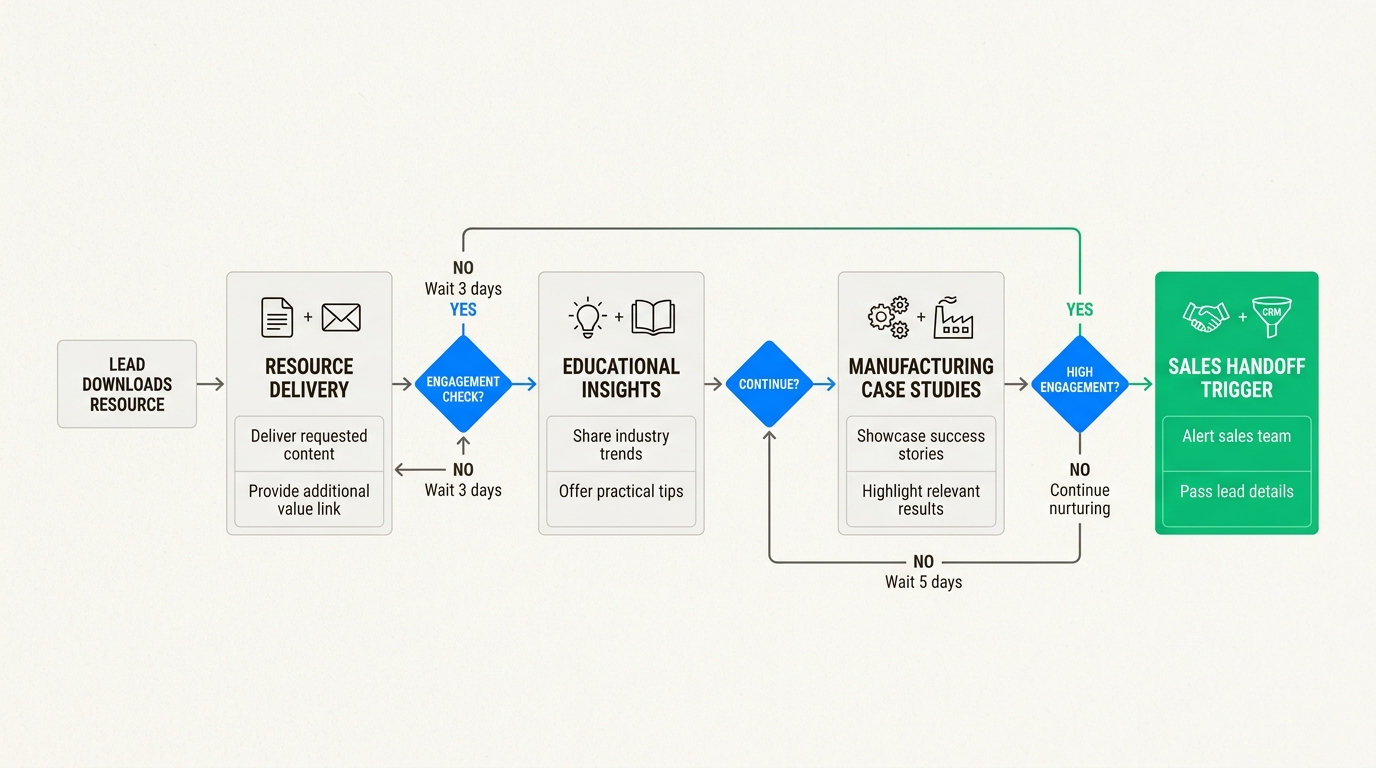
- Create nurture sequences that educate MQLs over time
- Use automation to trigger relevant content based on behaviour
- Know when to pass leads to sales (and when to keep nurturing)
Research from Demand Gen Report shows that 62% of B2B buyers consume multiple pieces of content before engaging with a vendor. Your email nurture sequences should deliver that content systematically.
Website visitor identification
Here’s a frustrating reality: the vast majority of your website visitors never fill out a form or contact you. They browse anonymously and leave without a trace.
Visitor identification tools solve this problem. They use IP address tracking to reveal which companies are visiting your website, which pages they’re viewing, and how often they return. This turns anonymous traffic into actionable lead intelligence.
For example, if a manufacturing company visits your pricing page three times in a week, that’s a strong buying signal. Your sales team can reach out with relevant, timely outreach rather than cold calling blindly.
Account-based marketing (ABM)
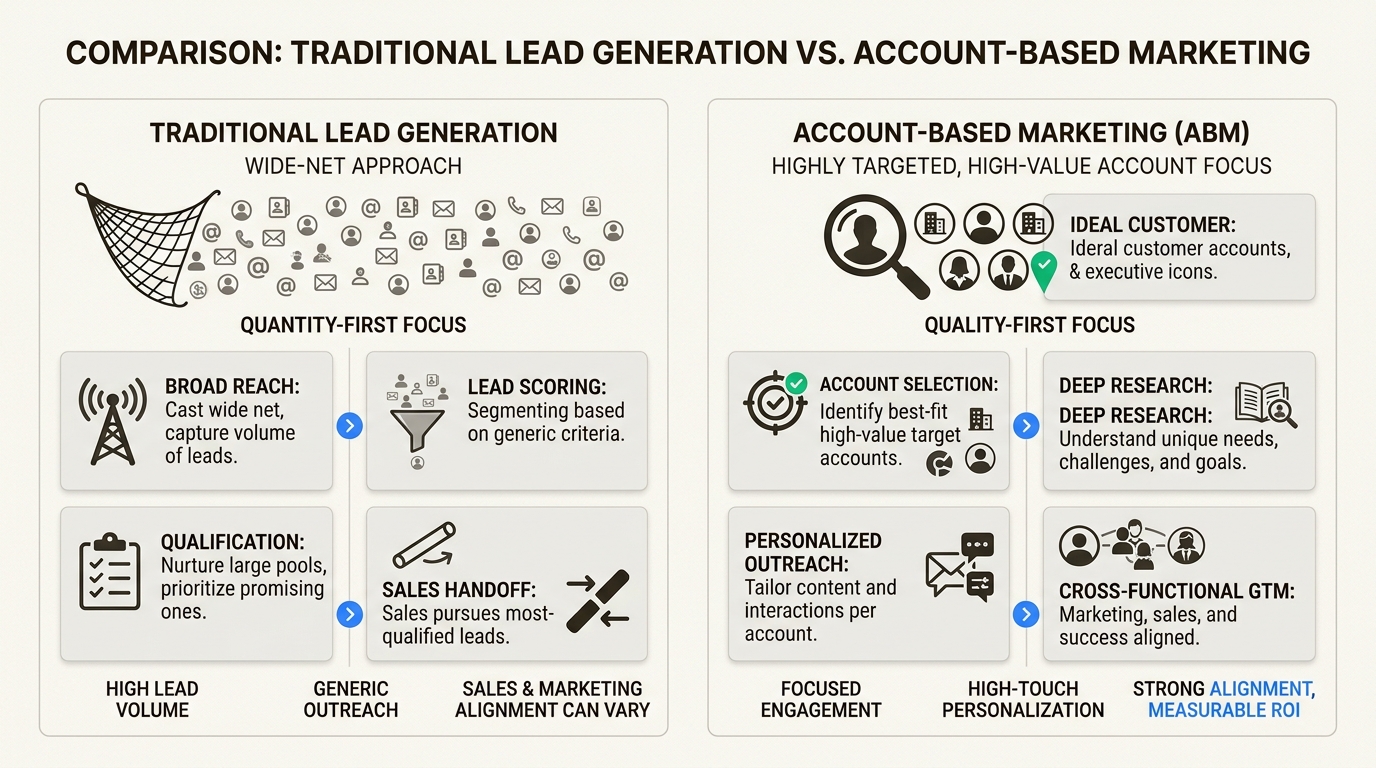
Traditional lead generation casts a wide net and hopes for the best. ABM flips this approach. You identify specific high-value accounts you want to win, then create personalised campaigns targeting the decision-makers at those companies.
ABM works particularly well for B2B businesses with:
- High-value deals (where winning one account justifies the investment)
- Long sales cycles (where relationships matter)
- Complex solutions (that require education and nurturing)
The approach requires close alignment between sales and marketing. Both teams need to agree on target accounts, messaging, and handoff criteria.
Measuring lead generation success
You can’t improve what you don’t measure. Track these key metrics to understand what’s working:
| Metric | What it tells you | How to improve |
|---|---|---|
| Conversion rate | Percentage of visitors who become leads | Better targeting, clearer CTAs, improved landing pages |
| Cost per lead | How much you’re spending to acquire each lead | Optimise ad spend, focus on organic channels |
| Lead quality score | How well leads match your ICP | Refine targeting, improve lead magnets |
| MQL to SQL conversion | How many marketing leads become sales-ready | Better lead scoring, improved nurturing |
| Sales cycle length | Time from first contact to closed deal | Better qualification, streamlined sales process |
Use a CRM system to track these metrics consistently. Regular reviews help you spot trends and optimise your approach. At Inspire BDM, we help clients set up measurement frameworks that actually drive decisions.
Common lead generation mistakes to avoid
After working with businesses across Lancashire and Yorkshire, we’ve seen the same mistakes repeatedly. Here’s what to watch out for:
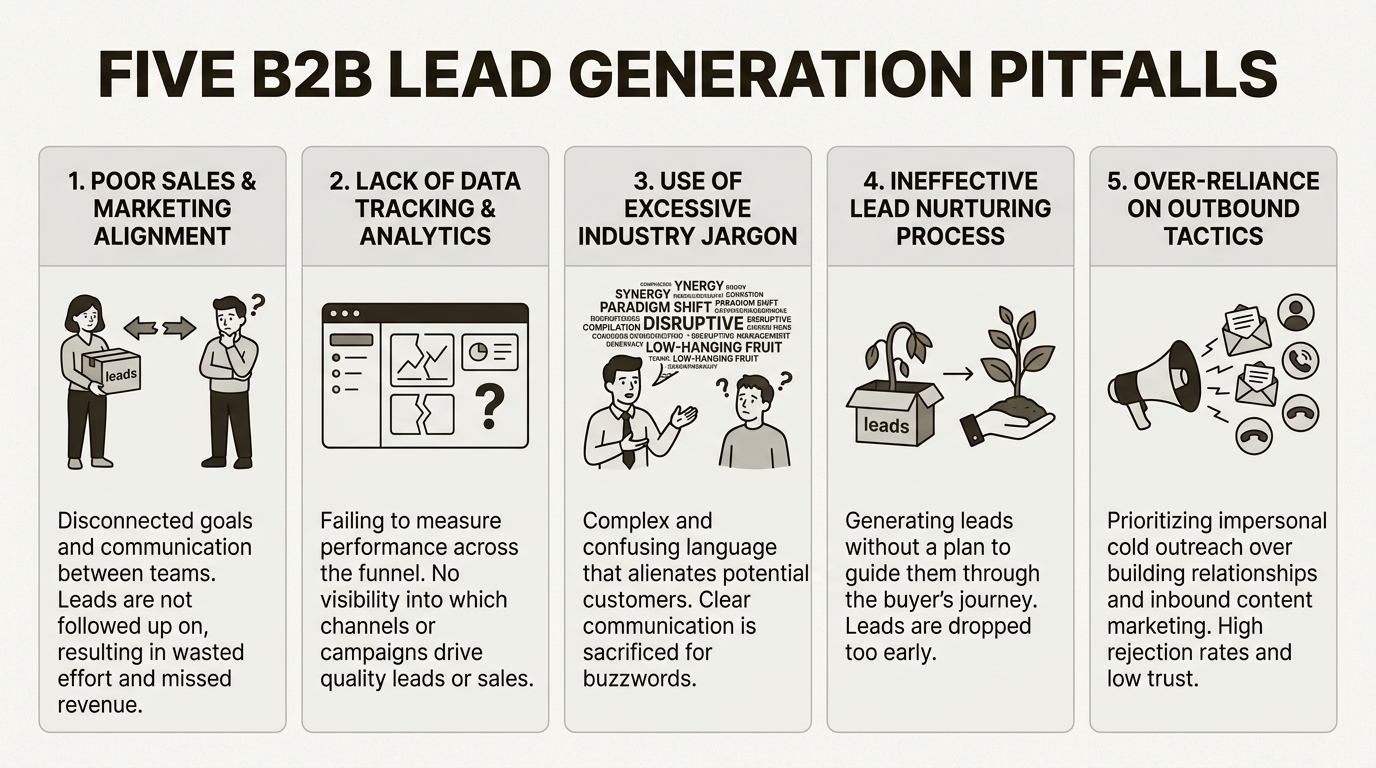
- Chasing quantity over quality. A thousand unqualified leads won’t pay the bills. Focus on attracting prospects who actually need your solution.
- Neglecting lead nurturing. Most leads aren’t ready to buy immediately. Have a system to stay in touch and build relationships over time.
- Poor sales and marketing alignment. If marketing celebrates lead volume while sales complains about quality, you have a problem. Both teams need shared definitions and goals.
- Not tracking results. Without data, you’re guessing. Implement proper tracking from day one.
- Using jargon instead of plain English. Your prospects are busy. Communicate clearly without hiding behind buzzwords.
Start generating quality B2B leads today
Effective B2B lead generation isn’t about finding a magic bullet. It’s about consistently executing the fundamentals: understanding your ideal customer, creating valuable content, and nurturing relationships over time.
Remember, lead generation is a marathon, not a sprint. The strategies we’ve covered take time to show results, but they compound. A blog post you write today might generate leads six months from now. An email nurture sequence keeps working while you sleep.
If you’re looking for support with your lead generation efforts, get in touch. We specialise in helping manufacturing, engineering, and service businesses across the North West generate quality leads without the jargon or hidden costs. Let’s have a proper conversation about what growth looks like for your business.
Frequently Asked Questions
How long does it take to see results from B2B lead generation efforts?
It varies by channel. Paid advertising can generate leads immediately, while SEO and content marketing typically take 3-6 months to gain traction. Email nurturing shows results within weeks if you have an existing list. The key is consistency. Lead generation compounds over time.
What’s the difference between inbound and outbound lead generation?
Inbound attracts prospects to you through content, SEO, and social media. Outbound involves proactively reaching out through cold calling, email outreach, or direct mail. Inbound typically has shorter sales cycles and higher conversion rates, while outbound gives you more control over who you target.
How do I know if my lead generation is working?
Track metrics that matter: conversion rates, cost per lead, lead quality scores, and ultimately, revenue generated. If you’re generating leads but they rarely convert to customers, focus on improving lead quality rather than volume.
Should I focus on one lead generation channel or multiple?
Start with 2-3 channels that best match your audience and resources. Spreading too thin across many channels leads to mediocre results everywhere. Once you’ve mastered your primary channels, expand gradually.
How can manufacturing and engineering businesses compete with larger companies for leads?
Focus on your niche expertise and local presence. Larger competitors often struggle to provide personalised service. Emphasise your understanding of industry-specific challenges and your ability to respond quickly. Case studies and testimonials from similar businesses carry significant weight.
What budget should I allocate to B2B lead generation?
Industry benchmarks suggest 5-10% of revenue for B2B companies, but this varies widely. Start with what you can afford consistently, measure results rigorously, and scale what works. A smaller, well-executed budget beats a large, scattered one.